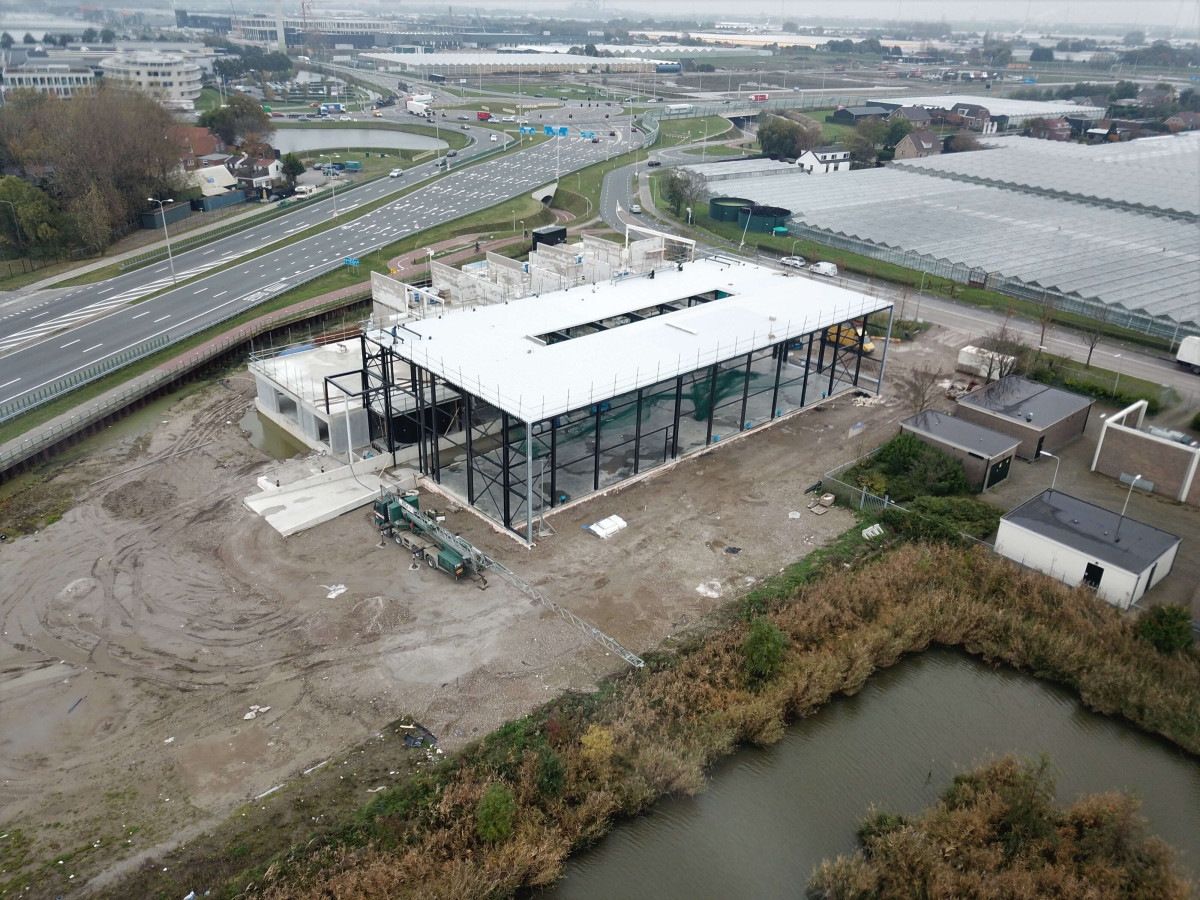
VB has achieved Level 3 on the CO₂ Performance Ladder
Sustainability is central at VB, which means we also critically examine our own CO₂ emissions.

Efficient cooling is a critical factor in maintaining a stable greenhouse climate. A cold storage tank helps growers manage cooling demand, reduce energy costs, and protect crop quality.
Efficient cooling is a critical factor in maintaining a stable greenhouse climate, especially in warmer regions of the United States such as California, Florida, and Arizona. A cold storage tank provides growers with a reliable solution to manage cooling demand, reduce energy costs, and protect crop quality. VB designs and installs cold storage tanks that integrate seamlessly with chillers, heat pumps, and greenhouse cooling systems.
A cold storage tank is a large, insulated water tank that temporarily stores chilled water. The main purpose is to ensure cooling capacity is available when the greenhouse climate requires it most, such as during hot afternoons. By buffering cooling energy, the system reduces peak loads on chillers and ensures stable conditions, safeguarding both crop quality and production levels.
VB offers American farmers and growers the most advanced commercial greenhouse solutions in the world. A cold storage tank is part of a complete energy and cooling system. Check out our related solutions below.

Chilled water is produced by a chiller or heat pump and stored in the cold tank. From there, it is distributed throughout the greenhouse via pipes or air-handling systems. This allows cooling to be applied exactly when and where it is needed. Growers can chill water when energy costs are lower, then use the stored cold water later during peak outdoor temperatures.
The required tank size depends on greenhouse size, crop type, and climate conditions. For U.S. projects, cold storage tanks typically range from 1,000 to 3,000 m³ of water for a 5- to 10-hectare greenhouse. At VB, we calculate the optimal capacity using detailed energy and cooling load analyses, ensuring the tank is large enough to manage peak demand without unnecessary investment costs.
A cold storage tank acts as a buffer between the cooling system and the greenhouse. Chillers or heat pumps cool the water and pump it into the tank, while the tank distributes it to the greenhouse cooling network. This setup improves efficiency and stability:
In hot and sunny regions like California or Florida, proper insulation is essential. Without insulation, chilled water would warm up too quickly, reducing system performance and increasing cooling demand. VB recommends cold storage tanks with high-grade insulation (similar to heat buffer tanks) and a vapor-tight finish to minimize energy losses. This ensures maximum efficiency and reliability, even in extreme climates.
We've successfully completed beautiful commercial greenhouse projects throughout the US. Are you interested in these projects? Take a look at our commercial projects.


At VB, we calculate the optimal tank capacity using detailed energy and cooling load analyses. That way the tank is large enough to manage peak demand without unnecessary investment costs, safeguarding both crop quality and production levels, even in the warmest regions of the United States.
Are you interested in reliable cooling for your commercial greenhouse? Let VB take care of your cooling and storage needs from start to finish. You'll get to work with some of the foremost leading experts in the global industry to come up with the best solution for your climate and crop.
Contact VB today and fill out our contact form, or email us at info@vb.nl, and one of our experts will get in touch with you.
A cold storage tank is a large, insulated water tank that temporarily stores chilled water. It ensures cooling capacity is available when the greenhouse climate requires it most, such as during hot afternoons. By buffering cooling energy, the system reduces peak loads on chillers and ensures stable conditions.
The required size depends on greenhouse size, crop type, and climate conditions. For U.S. projects, cold storage tanks typically range from 1,000 to 3,000 m³ of water for a 5- to 10-hectare greenhouse. VB calculates the optimal capacity using detailed energy and cooling load analyses.
Chillers or heat pumps cool the water and pump it into the tank, while the tank distributes it to the greenhouse cooling network. Chillers don't need to run continuously at full power, and cooling can be built up during low-cost hours or with renewable energy sources such as solar.
Yes. In hot and sunny regions like California or Florida, chilled water would warm up too quickly without insulation. VB recommends high-grade insulation (similar to heat buffer tanks) and a vapor-tight finish to minimize energy losses.