Greenhouse construction
Looking for a greenhouse construction company from the Netherlands? VB is a leading greenhouse construction company and active in the USA.
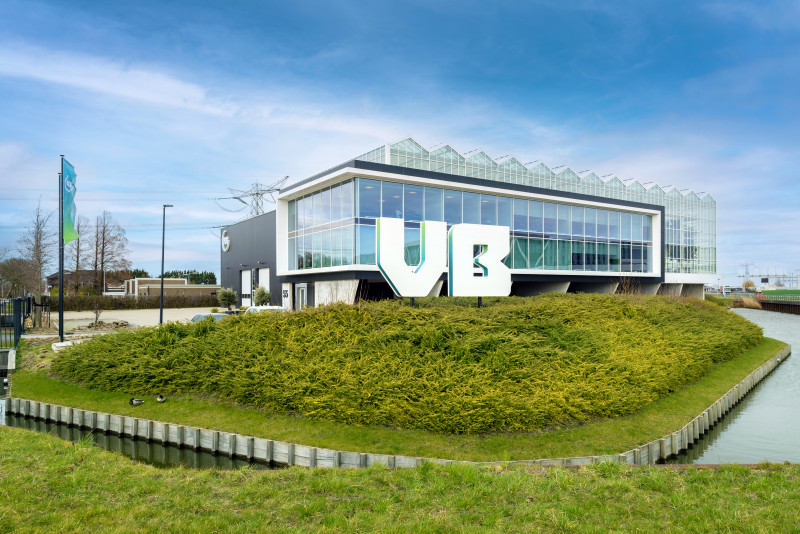
Energy storage for commercial greenhouses. Lower energy costs, peak load management and a stable climate.
A heat buffer tank is a large, insulated water tank used to temporarily store thermal energy. It acts as a bridge between energy production and heating demand: it reduces strain during peak loads and stores excess renewable heat for later use. The result: lower energy costs through off-peak usage and stable temperatures for crop quality.
Heat buffer tanks integrate with heat pumps and geothermal systems: a stable climate, lower operating costs and less CO₂
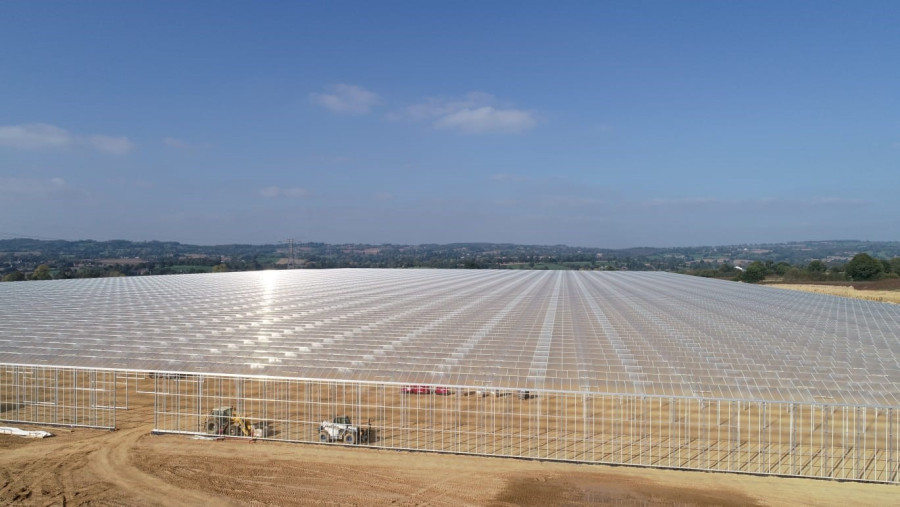
VB built the largest heat storage tank in the USA. Supplying heat to current and future greenhouse phases.
Size: 11.3 hectares (27 acres), tomatoes year-round
Delivered: heating systems, CO₂ systems, heat storage tank
The heat storage tank holds 10,000,000 liters of water and supplies heat to the current greenhouse and future expansion up to 25 hectares (62 acres).
Check out the details behind the Intergrow story. VB also realised other major sustainable energy projects throughout the U.S.


A heat buffer tank is a large, insulated water tank used to temporarily store thermal energy. It helps growers reduce energy costs through off-peak usage, adds flexibility in managing supply and demand, and maintains stable temperatures for crop quality.
The size of a buffer tank depends on the greenhouse surface, crop type, and energy source. For a 5-hectare greenhouse in the USA, tanks typically hold 1,500 to 2,500 m³. VB performs a custom calculation for each project.
A heat buffer tank acts as a bridge between energy production and heating demand. It reduces strain on the heating system during peak loads and stores excess renewable heat for later use.
Heat buffer tanks are typically made of steel and insulated with high-grade mineral wool or foam insulation of at least 200 mm. VB recommends U-values below 0.3 W/m²K, with a vapor-tight outer layer to prevent condensation.
Yes. Integration with heat pumps and geothermal systems delivers a stable greenhouse climate, lower operating costs, and a significant reduction in CO₂ emissions.